
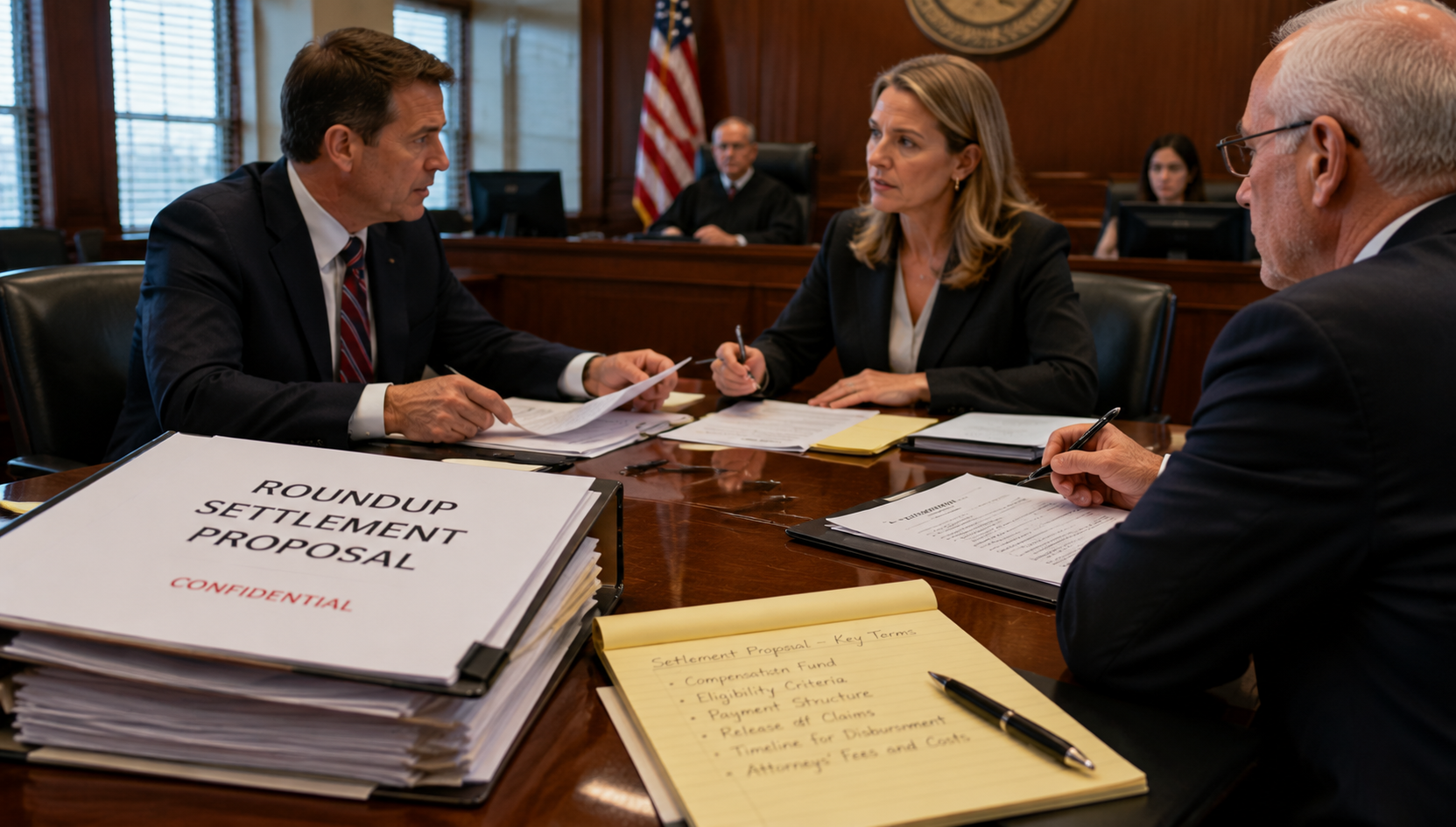
This year has brought major developments in Roundup litigation, including a proposed $7.25 billion settlement that could resolve thousands of claims and a high‑stakes Supreme Court case that could change the future of glyphosate lawsuits.
What Is the $7.25 Billion Roundup Settlement?
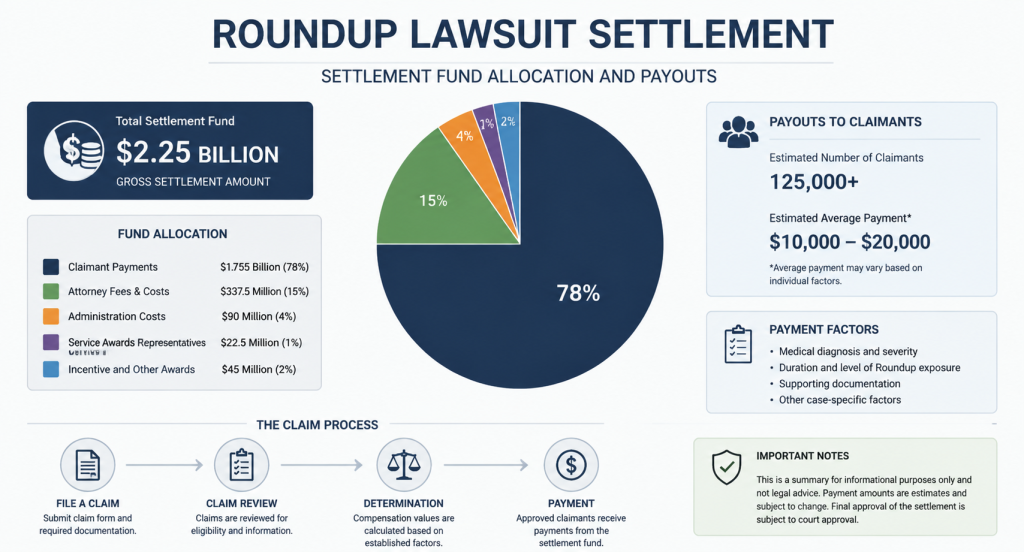
In February 2026, Bayer — the owner of Monsanto, which originally made Roundup — agreed to a proposed nationwide settlement of about $7.25 billion to resolve a large portion of the pending Roundup cancer lawsuits.
The deal is designed to address tens of thousands of claims made by people who allege long‑term exposure to glyphosate — the active ingredient in Roundup — caused serious cancers such as non‑Hodgkin lymphoma. Under the proposal, Bayer would make annual payments into a fund lasting up to 21 years to compensate current and future claimants.
Settlement amounts vary widely, depending on factors like age, type of lymphoma, and exposure level. In some estimates, compensation could range from less than $10,000 to more than $150,000, though exact amounts depend on case specifics and court approval.
Preliminary Court Approval and Pushback
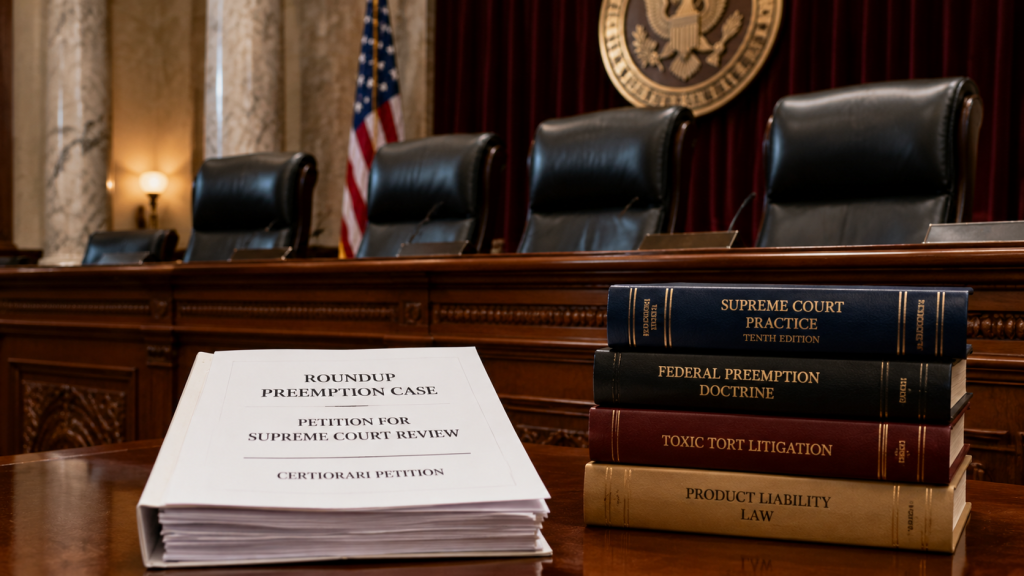
In March 2026, a Missouri state court granted preliminary approval for the settlement plan. The decision cleared an initial legal hurdle, allowing the process to move forward and begin notifying class members about the proposed agreement.
However, not all attorneys representing Roundup plaintiffs support the deal. Law firms representing thousands of claimants have argued that the settlement terms may be unfair and believe that many victims might receive more through individual jury verdicts or alternative resolutions.
Supreme Court Weighs in on “Preemption”
One of the most significant legal questions now before the U.S. Supreme Court is whether federal law — specifically the Federal Insecticide, Fungicide, and Rodenticide Act (FIFRA) — preempts state failure‑to‑warn claims. Bayer argues that because the Environmental Protection Agency (EPA) approved glyphosate without a cancer warning, state-based lawsuits should be barred.
Opponents of preemption argue that even if the EPA did not require a warning, companies like Bayer should still be held liable under state consumer protection and product liability laws if they failed to adequately disclose cancer risk evidence. This preemption argument is central to the Supreme Court case known as Monsanto v. Durnell.
The Supreme Court has already heard arguments on whether federal pesticide approval shields Bayer from lawsuits filed across the country, and its eventual decision — expected later in 2026 — could dramatically affect ongoing and future Roundup litigation.
How This Affects Plaintiffs
If the settlement is approved and upheld, many claimants may see resolution and compensation without prolonged litigation. For many people researching whether they qualify to file a lawsuit, such a settlement could offer a route to secure funds more quickly. You can learn more about qualifying criteria in our article on who may qualify for a Roundup lawsuit.
However, if the Supreme Court rules in favor of preemption, it could limit plaintiffs’ ability to pursue claims in state courts, meaning fewer lawsuits might survive and fewer individual verdicts may be possible. This could emphasize the importance of the settlement process. For context on how courts are handling Roundup claims, see our overview of Roundup litigation in courts today.
Settlements vs. Jury Verdicts
Roundup litigation has a record of both large jury awards and negotiated settlements. Some plaintiffs have won verdicts in the hundreds of millions or more, such as multi‑billion dollar punitive damage awards in earlier cases. Those outcomes have helped push parties toward settlement to avoid unpredictable results.
Yet many law firms representing claimants contend that current proposed settlement terms may shortchange some plaintiffs compared with potential jury outcomes, especially for younger plaintiffs with aggressive cancers. Balancing predictable settlements against unpredictable jury verdicts remains a key strategic consideration for legal teams and claimants alike.
Potential Impact on Future Litigation
The Supreme Court’s ruling on preemption is poised to influence not just Roundup lawsuits — but all product liability suits that hinge on federal regulatory approvals. A ruling that federal pesticide law preempts state claims could limit liability on similar products. Conversely, a rejection of preemption could affirm states’ ability to pursue failure‑to‑warn claims for a broad range of products.
Because of this, many attorneys and industry observers are watching closely. For those researching legal options, understanding this landscape is crucial, especially when considering individual versus class commitments. Learn more about legal process basics in our post on Roundup lawsuit FAQs.
Conclusion
The proposed $7.25 billion Roundup settlement and the pending Supreme Court decision on preemption are among the most consequential legal developments in 2026 for glyphosate claims. These developments could shape how lawsuits are resolved for years to come and potentially bring closure for thousands of people affected by alleged Roundup exposure.
Staying informed and consulting with an experienced attorney remains vital, whether you are considering joining a settlement program or pursuing an individual claim.